Saturday, August 4, 2012

Happy 75th Birthday Valentino Macchi


Valentino Macchi was born on August 4, 1937 in Bologna, Italy. Macchi has appeared in over 130 films and TV appearances since debuting in “Boccaccio '70” in 1962. Among his many films have been appearances as a character actor in 21 Euro-westerns including such titles as “Django” (1965), “A Bullet for the General” “The Man from Nowhere”, “Yankee” (all 1966), “Any Gun Can Play”, “Bandidos” (both 1967), “I Want Him Dead” and “Starblack” (aka Johnny Colt” (both 1968). Macchi usually plays a henchman or saloon patron. Seldom seen in anything greater than a supporting role he has still been a major player in the genre. Valentino’s last appearance was in the 2006 Italian TV series “Inspector Coliandro” as Dr. Guizzardi. Today we celebrate Valentino Macchi’s 75th birthday.

Friday, August 3, 2012

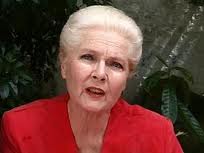
Guess Who I Am


I’m a French actress born in Paris in 1937.

I’ve appeared in over 60 films and TV appearances.

I appeared in only one Euro-western in 1966 with Giuliano Gemma.

Guess who I am.

Eric correctly named  Corinne Marchand as this week's photo.


Remembering Kurt Zips


Kurt E. Zips was born on August 3, 1922 in Vienna, Austria. From 1943 to 1945 Zips was a member of the Vienna Burgtheater. Kurt appeared in numerous films and TV productions starting in 1949, mostly humorous characters, such as in “Pippi Longstocking Langstrumpf auf der Walze”, “Graf Yoster gibt sich die Ehre” ( both 1970), the miniseries “Die Powenzbande” (1973) with Gustav Knuth and also “Zwei himmlische Töchter” (1978) with Ingrid Steeger. Zips appeared in one Euro-western in a cameo appearance as the El Paso hotel owner in “For a Few Dollars More” (1965).

Zips' high, squeaky voice often made him a sought-after voice actor, however he was mainly earmarked for roles in animated films, for example, Alexander die Maus in “Die Biene Maja”, Ulme in “Wickie und die starken Männer”, Dr. Bunsen Honeydew in the Muppet Show or as Elmer Fudd in Bugs Bunny cartoons. Zips died in Munich, Bavaria, Germany on August 24, 1988. He was only 66.

Today we remember Kurt Zips on what would have been his 90th birthday.

Thursday, August 2, 2012

RIP John Harris


John Harris has died at age 87. He had a 53-year career in films, working on movies such as “Chitty Chitty Bang Bang” (1968), “The Man With the Golden Gun” (1974), “Superman” (1978) and “The Running Man” (1987).

He was born in Wimbledon, south-west London, the second son of a solicitor, and educated at King's College school, Wimbledon. From an early age he was fascinated by cameras and he asked for a Zeiss Ikon for his 14th birthday. In 1941, he started work in the camera department at Gainsborough Pictures at "the Bush", their studio in Lime Grove, west London, as a clapper boy and focus puller.

John served in the navy during the second world war, and was an official naval photographer at the Japanese surrender in Hong Kong in 1945. He became a freelance camera operator in 1949 when "the Bush" studio was taken over by the BBC and Gainsborough closed soon afterwards.
Early in his career, he met the cinematographer Bob Krasker and went on to work with him on 20 films over a period of 16 years, including “Another Man's Poison” (1951), “Romeo and Juliet” (1954) and “El Cid” (1961). Harris also worked with such directors of photography as Denys Coop, Chris Challis and Ted Scaife, as well as directors including Carol Reed, Ken Hughes, Guy Hamilton and Richard Donner.

He retired in 1996, having worked on 107 films. In 1976 he was elected an associate member of the British Society of Cinematographers, becoming a full member in 1985. During his retirement, he lived, with his wife Ursula, whom he married in 1954, in West Wittering, West Sussex, where he regularly assisted the local amateur dramatics society with their lighting and the construction of their sets.

He is survived by Ursula and their three sons, Christopher, Michael.

Harris was camera operator on three Euro-westerns: “The Trap” (1966), “Catlow” and “Hannie Caulder” (both 1971).

MONTANA TRAP


Potato Fritz – German title
Zwei gegen Tod und Teufel – German title
Massacre em Condor Pass – Brazilian title
Massacre en Condor Pass – French title
Ta katharmata tis megalis sfagis – Greek title
Massacre a Condor Pass – Italian title
Syv kors i Montana – Norwegian title
Proschyot leitenant Sleida – Russian title
Montanafällan – Swedish title
Klopka u Montani – Yugoslavian title
Montana Trap – English title

A 1975 West German production [Schamoni Eucent (Munich)]
Producer: Peter Schamoni
Director: Peter Schamoni
Story: Paul Hengge
Screenplays: Paul Hengge
Cinematography: Jost Vacano, Wolf Wirth (Wolfgang Wirth) [Technicolor]
Music: Udo Jürgens (Udo Bockelmann), Anton Dvořák
Song: “He’s a Friend of Mine (The Ballad of Potato Fritz)” sung by David Hess
Running time: 96 minutes

Cast:
Potato Fritz/Captain Henry Ebedard Jansen – Hardy Krüger (Franz Krüger)
Bill Ardisson – Stephen Boyd (William Millar)
James Wesley – Arthur Brauss (Artur Brauss)
Martin Ross – Frederick Ledebur (Friedrich von Ledebur-Wicheln)
Sergeant Stark – Paul Breitner
Martha Comstock – Diana Körner
Jane Antrim – Christiane Gött
Lisutenant Slade – Anton Diffring (Alfred Pollack)
Reverend Cavenham – Peter Schamoni
Smoothie Nestler – Dan van Husen
Sleeve – David Hess
Soldier – Pit Schröder
Miner - Rainer Basedow
Bear cub – Henry
With: Luis Barboo, Heinrich Starhemberg (Heinrich von Starhmeberg), Malachy McCourt, Helmet Brasch, Carl Rapp, Bob Simmons (Robert Simmons), Eva Bergamanova, Meg Clancy, Francesca Kruger (Francesca Marazzi), Gonzalo Cañas, Robert Chase, Raúl Castro, Jesus Fernández (Jesus Martinez), Jorge Gleser, Juan José Maján, Vidal Molina (Mariano Molina), Desmond Thompson, David Thompson (David Thomson), Fernando Villena


Potato Fritz and his friends have moved from Germany to the American Wild West in 1850, settling eventually in the Rocky Mountains. They are besieged by what appear to them to be hostile Native Americans. Before too long, it becomes clear that the hostiles are in fact a gang of gold thieves. Fritz and his friends then set out with the help of soldiers from nearby Fort Lane to put an end to the organized gangsters.

[Asked about his remembrances of the film my friend Dan van Husen replied, “The director Peter Schamoni asked me to drive his new big BMW limo to Madrid and after 6 weeks to drive it back again. I really enjoyed that, I love big cars. We all went to the football games at the Real Madrid stadium as Paul Breitner was one of our guest stars, was a great footballer (soccer player). Stephen Boyd did not look well, David Hess, Arthur Brauss, Anton Diffring and I had a good time.”]


Wednesday, August 1, 2012

DVD Review by Lee Broughton


A Mark Damon Double Feature. Wild East, USA. Format: NTSC Region 0.

Kill and Pray Widescreen (1.85:1). Directed by Carlo Lizzani. 102 minutes. 1967.

A Southern aristocrat, George Ferguson (Mark Damon), oversees the massacre of a band of Mexicans whose land he has stolen. The small son of the Mexicans' leader somehow survives and is found wandering in the wilderness by an itinerant preacher and his single-parent sister. The preacher takes the child on as his own and the boy makes an ideal companion for the preacher's small niece, Princy. The years pass by happily until the day that Princy (Barbara Frey) runs away with a company of travelling stage-players. The adopted Mexican (Lou Castel) vows to find her and bring her home. His travels lead him straight to San Antonio where a run-in with Ferguson's men, who are forcing Princy to work as a prostitute, sets in motion a chain of events that result in the Mexican remembering shocking details from his past.

Actor Lou Castel only made a few Spaghetti Westerns but the unusual characters that he chose to play ensured that he made a lasting impression on genre fans. Here he plays a very reluctant and unassuming young gunman from a religious background who earns himself the moniker Requiescant due to his habit of saying prayers over the bodies of the villains that he kills. Requiescant's main enemy here, George Ferguson, is one of Mark Damon's most interesting genre characters while also being one of the genre's most unusual villains. A thin and peculiarly anemic looking dandy, Ferguson is a violent and psychotic racist and misogynist. His aristocratic cape makes him look like a vampire while his Confederate great coat looks like it was borrowed from a Third Reich storm trooper.

Whenever Requiescant is forced to kill somebody, the mysterious Don Juan (Pier Paolo Pasolini) and three members of his war council immediately show up and appropriate the dead men's weapons for use in their long-planned revolution. And when Juan discovers Requiescant's true identity, he uses the personal conflict that is present between Requiescant and Ferguson as the trigger that makes the revolution become a reality. Pasolini's numerous appearances here largely consist of him popping up to deliver short bursts of political and moral wisdom and the earnest tones that his English dubber employs to deliver these political speeches adds to the trippy and sub-psychedelic vibe that runs through the whole film.

Interestingly, the film's political content would seem to reach much further than Pasolini's periodic verbal interjections. The set-pieces that feature racist and misogynistic behavior would appear to have a purpose that goes beyond mere grindhouse-style shock tactics: there's an impression that Lizzani and his writers were seeking to provoke a moral or political response with their approach here. But the film's biggest political statement is perhaps delivered when Juan's planned armed revolution is largely made redundant by what is effectively a relatively peaceful, Spaghetti Western-set, workers' general strike.

While it's not difficult to understand why a character like Pasolini would choose to be involved in a show like this, it has to be said that the film's political themes do not overshadow or interfere with its ability to entertain as a genre feature. The largely allegorical nature of the show's political content means that it still works exceedingly well as a hugely entertaining, if slightly surreal, Spaghetti Western. Naturally there are several action set-pieces present here and most of them are original and well-staged in their execution. Kill and Pray is essentially a fairly low-budget affair but undoubted care and technical expertise went into its assembly and the show boasts some really good cinematography and editing. Most of the acting here hits the mark too and genre stalwart Riz Ortolani provides an interesting soundtrack score.

Picture quality here is near excellent. The presentation boasts really vibrant colours and nothing in the way of print damage. However, odd scenes do feature a touch of motion blur. The show's sound quality is very good.

Extras: image gallery and the film's Italian trailer.

Dead Men Don't Count Widescreen (2.35:1). Directed by Rafael Romero Marchent. 86 minutes. 1968.

Two unscrupulous bounty killers, Fred (Anthony Steffen) and Johnny (Mark Damon), arrive in Blackstone where the corrupt sheriff, Bob (Piero Lulli), soon arrests them. Bob is working for a local businessman, Rogers (Luis Induni), who has been stealthily arranging the murders of local landowners so that he can take over the area and make a mint when the railroad arrives. As such, Fred and Johnny have been set up to hang for a crime that they didn't commit. However, years earlier one of Rogers' first victims was the husband of his current wife (Maria Martini) and she gave away her young son when she subsequently married Rogers. A distinctive pistol that Johnny owns gives Rogers' wife the impression that he is her son and she arranges for the duo to be released. Rather than leaving town, the duo stick around and offer their assistance to the remaining landowners who are fearful for their lives and land. With his best men being gradually wiped out by Fred and Johnny, who are now close to discovering the truth about his criminal activities, a desperate Rogers sends for the infamous Lassiter Brothers' gang (Raf Baldassarre and company) and the scene is set for a violent climactic confrontation.

This show has something of an all-star cast in genre terms. Anthony Steffen and Mark Damon play their usual anti-hero genre types to good effect as does Piero Lulli in his role as the corrupt sheriff but the show is nearly stolen by Raf Baldassarre who enters the picture for its final third or so. Clean-shaven, scrubbed up and smartly turned out in generic cowboy clothing, Baldassarre's Lassiter looks quite boyish and unassuming when compared to the raggedy dressed and unwashed varmints that the actor usually plays. However, looks can be deceiving and Lassiter turns out to be one of the most despicable and callous villains in Baldassarre's quite considerable genre filmography. The rest of his gang are no slouches either. Other familiar faces that genre fans will be pleased to find here include Barta Barri and Carlos Romero Marchent who play a father and son whose land is targeted by Rogers.

This is essentially a lower-middle tier genre entry that punches well above its own weight thanks to a number of key ingredients. As noted already, it's got a pretty good cast. The show also boasts some solid and reasonably stylish direction and cinematography by the ever dependable Rafael Romero Marchent and Franco Delli Colli. Add to this a rousing soundtrack score (courtesy of genre stalwart Riz Ortolani) and an engaging storyline that has a neat twist ending that serves to pass comment on the genre's obsession with family ties and you've got a decent little genre flick. I'd never come across this show prior to Wild East's DVD release and I thoroughly enjoyed it. The only slightly negative aspect here for me is the odd play for mild laughs that fall flat but these comedic blips are few and far between and so don't adversely affect the show too much.

Picture quality here is very good for the most part. There's not much in the way of print damage but odd scenes do feature a touch of motion blur. A short early sequence and parts of the front and end titles have seemingly been sourced from elements of a slightly lesser quality in order to present the film uncut. The presentation's sound quality is generally good.

Extras: Mark Damon Interview and an image gallery that includes a comic strip adaptation of the film.

© 2012 Copyright Lee Broughton.

A more detailed review of Kill and Pray can be found here: http://www.dvdtalk.com/dvdsavant/s1732pray.html

Happy 70th Birthday Giancarlo Giannini


Giancarlo Giannini was born on August 1, 1942, in La Spezia, Italy. For ten years young Giannini lived and studied in Naples, earning his degree in electronics. At the age of 18 he enrolled in the Academy of Dramatic Art D'Amico in Rome, making his stage acting debut there. His credits included performances in contemporary Italian plays, as well, as in Italian productions of William Shakespeare's plays. In 1965 he made his debut on television starring as David Copperfield in the TV mini-series made by RAI. He made his big-screen debut in “Libido” (1965). Since 1966 he has been in a successful collaboration with the legendary Italian director Lina Wertmüller [1926- ] who made several award-winning films with Giannini as a male lead. Giannini appeared in the Euro-Western “Blood Red” (1988).

Giannini also made a reputation for dubbing international stars in films released on the Italian market, such as Jack Nicholson, Al Pacino, Michael Douglas, Dustin Hoffman, Gérard Depardieu and Ian McKellen, among others. Giancarlo was the voice of Harvey Keitel in the 1998 Euro-western “Il Mio West” (aka “Gunslinger’s Revenge”). Giannini's fluency in English and his mastery of dialects has brought him a number of supporting roles in Hollywood productions, such as A “Walk in the Clouds” (1995), “Hannibal” (2001), “Darkness” (2002), “Man on Fire” (2004) and “Casino Royale” (2006), and reprises the role in the sequel, “Quantum of Solace” (2008).

Today we celebrate one of the major stars of the Italian cinema, Giancarlo Gianinni on his 70th birthday.