Gustav Adolf Karl Friedrich Knuth was born on July 7, 1901 in Brunswick, Germany. Gustav took acting lessons at 17 and made his stage debut in Harburg, Germany in 1919. From 1922-1925 he played in Basel and from 1933-1936 he appeared at the Deutsches Schauspielhaus in Hamburg. During this time he made his first film appearance in 1935s From there he joined the Prussian State Theater in Berlin and remained there until 1945. From 1945-1949 he returned to Hamburg. In 1946 he was the appointed representative of the occupying British Forces. He had made his first film appearance in 1935's "The Ammenkönig". Although he continued to make films it wasn’t until his TV appearance in the 1962 series "Alle meine Tiere" (All My Animals) as veterinarian Dr. Hofer that he found stardom. He continued to appear on radio and TV series such as "Großer Mann, was nun?" (1967-1968) and the 26 part series "Drüben bei Lehmanns" in 1971. Gnuth was married to actress Gustl Busch [1900-1964] and they had a son Klaus Knuth [1935- ] also an actor. After his divorce to Busch in the ‘30s he married actress Elisabeth Lennartz [1902-2001]. The couple retired to Switzerland where Gustav wrote his memoirs in 1974 "Mit einem Lächeln im Knopfloch" (With a Smile on My Lapel). Gustav appeared in only one Euro-western "Legend of a Gunfighter" in 1964 with Thomas Fritsch. Knuth died of a heart attack on February 1, 1987 in Küsnacht, Zürich, Switzerland. Today we remember Gustav Knuth on what would have been his 110th birthday.
Thursday, July 7, 2011
Remembering Gustav Knuth
Gustav Adolf Karl Friedrich Knuth was born on July 7, 1901 in Brunswick, Germany. Gustav took acting lessons at 17 and made his stage debut in Harburg, Germany in 1919. From 1922-1925 he played in Basel and from 1933-1936 he appeared at the Deutsches Schauspielhaus in Hamburg. During this time he made his first film appearance in 1935s From there he joined the Prussian State Theater in Berlin and remained there until 1945. From 1945-1949 he returned to Hamburg. In 1946 he was the appointed representative of the occupying British Forces. He had made his first film appearance in 1935's "The Ammenkönig". Although he continued to make films it wasn’t until his TV appearance in the 1962 series "Alle meine Tiere" (All My Animals) as veterinarian Dr. Hofer that he found stardom. He continued to appear on radio and TV series such as "Großer Mann, was nun?" (1967-1968) and the 26 part series "Drüben bei Lehmanns" in 1971. Gnuth was married to actress Gustl Busch [1900-1964] and they had a son Klaus Knuth [1935- ] also an actor. After his divorce to Busch in the ‘30s he married actress Elisabeth Lennartz [1902-2001]. The couple retired to Switzerland where Gustav wrote his memoirs in 1974 "Mit einem Lächeln im Knopfloch" (With a Smile on My Lapel). Gustav appeared in only one Euro-western "Legend of a Gunfighter" in 1964 with Thomas Fritsch. Knuth died of a heart attack on February 1, 1987 in Küsnacht, Zürich, Switzerland. Today we remember Gustav Knuth on what would have been his 110th birthday.
Wednesday, July 6, 2011
RIP Gordon Tootoosis
 Saskatoon actor, activist Gordon Tootoosis dead at 69
Saskatchewan-born actor and aboriginal activist Gordon Tootoosis has died at the age of 69 after a brief illness (pneumonia). Tootoosis, a Cree from the Poundmaker First Nation, was one of the stars of CBC's "North of 60" television series. His long career ranged from the 1973 film "Alien Thunder" with Donald Sutherland and Chief Dan George to 1996's "Legends of the Fall" with Brad Pitt. Despite his success in the entertainment industry, Tootoosis always made his home on the Poundmaker reserve and used to joke that the movers and shakers in Hollywood knew where to find him. Gordon appeared in two Euro-western TV series "Bordertown" (1989-1991) and "Hawkeye" (1994).
THE HANDSOME, THE UGLY AND THE STUPID

El guapo, el feo y el cretino - Spanish title
The Beautiful, the Bad and the Idiotic - English title
The Handsome, the Bad and the Idiotic - English title
The Handsome, the Ugly and the Stupid - English title
A 1967 Italian, German co-production [Claudia Cinematografica (Rome), Tefi Filmproduktion(Munich)]
Producer: Gino Mordini
Director: Gianni Grimaldi (Giovanni Grimaldi)
Story: Giovanni Grimaldi
Screenplay: Giovanni Grimaldi
Cinematography: Aldo Marini (Aldo Giordani) [Kodakcolor, widescreen]
Music: Lallo Gori (Coriolano Gori)
Running time: 92 minutes
Cast:
‘The Stupid’ - Franco Franchi (Francesco Benenato)
‘The Ugly’ - Ciccio Ingrassia (Francesco Ingrassia)
‘The Handsome’ - Mimmo Palmara (Domenico Palmara)
Captain Imbriatella - Lothar Guntener (Lotar Gunther)
1st sheriff - Peter Jacob (Pietro Ceccarelli)
prisoner - Enzo Andronico (Vincenco Andronico)
Fabienne - Brigitt Petry
bookmaker - Gino Buzzanca (Gerolama Buzzanca)
sergeant - Giovanni Ivan Scratuglia (Ivan Giovanni Scratuglia)
saloon patron - Artemio Antonini
saloon girl Mara Krupp
Mexican - Fortunato Arena
cowboys in dream - Pietro Torrisi, Omero Capanna
with: Eugenio Galadini, Bruno Scipioni, Massimo Serato (Giuseppi Serato), Puccio Ceccarelli (Lanfranco Ceccarelli), Alfredo Adami (Vulzinio Adami)

Franco is a bounty hunter, while Ciccio is a wanted bandit. With the complicity of Ciccio, Franco delivers him to the sheriffs of various settlements that cross their path, and pockets the rewards. When Ciccio is about to be hanged, Franco saves him by shooting the rope. One day, however, Franco accidentally lets Ciccio hang. Believing his companion dead, Franco tries to forget by playing poker at the saloon. Here, blatantly cheating, he wins a large sum of money that attracts Fabienne, a waitress in the saloon. The two have a chat in private and, while Franco embraces the woman, she holds a gun behind his back, because she wants the money he has won. Franco tries to recover the money by playing more poker, but loses everything. Leaving the saloon, he does not realize that Ciccio is sitting on his horse and that he is by no means dead. He managed to escape thanks to the "collar of Santa Rosalia". Ciccio wants revenge against Franco for letting him almost die and takes him into the desert to suffer great heat and thirst Franco implores Ciccio to shorten his sufferings by shooting him. While wandering in the desert the two encounter a Confederate sergeant who trusts them and at the point of death reveals the place where he has buried a treasure. The two crooks each know one only half of the location for the recovery of the loot: Ciccio knows the name of the cemetery, while Franco knows the name of the grave. The two agree to split the money fifty-fifty, and set out on the trail of the gold. They do not know, however, that also searching for those dollars is another character: "Handsome". After a long journey, (They are first made Confederate Army prisoners then volunteer to enlist in the Union army), the two companions reach the cemetery. Here, however, they are met by the Handsome, who retrieves the box full of dollars. Just when Handsome is about to mount his horse, he is confronted by Fabienne, who runs away with the dollars. All three are stunned, but agree to the idea of forming a trio unsurpassed, with Franco and Ciccio as "wanted men", and Handsome as a bounty hunter.
YouTube link: http://www.youtube.com/watch?v=NemP1_N0FmQ
Tuesday, July 5, 2011
RIP Dusan Janićijević
 Dusan Janićijević a giant of the Yugoslav and Serbian cinema, died this morning July 5, 2011. He was 79. Dusan died at his home in Grgurju, Blace, Serbia. Born on April 27, 1932 in Grgurju, he graduated from the Theatre Academy in Belgrade. He began his film work as a student and starred in "Stojan Mutikasa" (1954) which won the Golden Arena at the first Yugoslavia Film Festival in Pula. Since then he appeared in over 500 films and television series. His last role was in the film "Revolt" (2011) which is post production. For over 60 years he played in many theaters in a string of roles. His book Memories was published two weeks ago. In it he recounts his life and his career. Dusan appeared in three Euro-westerns "Flaming Frontier", "Rampage at Apache Wells" (both 1965) and "The Jack London Story" (1973). His body will be transferred to Belgrade where the date of his cremation set.
Who Are Those Gals? - Brigitte Bardot
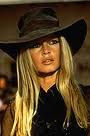
BARDOT, Brigitte (Brigitte Anne-Marie Bardot) [9/28/1934, Paris, Île-de-France, France - ] - model, ballet dancer, sister of actress Mijanou Bardot [1938- ], married to director Roger Vadim [1928-2000] (1952-1957), actor Jacques Charrier [1936- ] (1959-1962), director, actor, Gunter Sachs [1932-2011] (1966-1969).
Viva Maria! - 1965 (Maria)
Shalako - 1968 (Countess Irina Lazaar)
The Legend of Frenchie King - 1971 (Louise ‘Frenchie’ King/Miller)
Monday, July 4, 2011
RIP Billy Beck
 Billy Beck, Character Actor and Clown, Dies at 86
Though he was known for his character acting, Beck was also a gifted cartoonist, painter, photographer and clown.
Billy Beck, one of the greatest of the great sad clowns, is gone. And an era is over.
He’s one of those guys you’ve seen in movies and TV for years and likely never knew his name. Most recently he appeared in the forgettable Zombie Strippers, but you’ve seen him in famous movies like Irma La Douce, The Fortune Cookie and Micki and Maude, as well as in hundreds of TV shows through the decades, including Bewitched, The Man from U.N.C.L.E., The Twilight Zone, The Monkees, E.R., and The King of Queens. He was a regular on several shows, including Lou Grant, playing the photo editor on several episodes, Falcon Crest (as Charles) and also on Mary Hartman, Mary Hartman, on which he made many return appearances as the quirky Lt. Trask.
But to many of us, he’ll be most fondly remembered as a sad clown, the character he invented in the streets of Paris in the 1940s and portrayed on the stage of the famed Cirque Medrano, along with Buster Keaton and other legendary sad clowns.
He died just nights ago on June 29 at the age of 86. Though he became famous for being one of this town’s most resonant character actors, he was also a gifted cartoonist, painter, photographer and, of course, clown.
During World War II, he was stationed in France, and whenever he had the opportunity, would go to Paris to see Buster Keaton and other legends and who performed at the Cirque Medrano. It was while he was still in the army that he fashioned his own Emmett Kelly-inspired tramp costume and make-up, and when the war was over in 1945 he stayed in Paris. Asked why, he said, “The city is beautiful, the language is beautiful, the women are beautiful – why would I leave?”
He started as a street performer and also a street artist in Paris, doing sketches and painted portraits. Soon he was performing on the stage of the famed Cirque Medrano, which led him to perform at venues and celebrations throughout Paris for the next 15 years.
But his love of cinema created in him a yearning to go to Hollywood and act in movies. And in 1960 he made the move, buying a small house on Robinson Street in Silver Lake, where he remained for the rest of his life.
In Hollywood, though he never intended to be a TV actor, he was steadily employed as an actor, appearing in every kind of show TV created, as well as soon landing his first big film role, that of Office DuPont in Irma La Douce (1963), which starred Jack Lemmon and Shirley MacLaine.
Billy appeared in one Euro-western 1993's "Silent Tongue" with the late actor River Phoenix.

Subscribe to:
Posts (Atom)