Neville Leo Brand was born on August 13, 1920 in Griswold, Iowa. One of seven children he was raised in Kewanee, Illinois. After high school he worked at several jobs before enlisting in the Army National Guard in 1939. Wounded in action during World War II he was discharged as a Sergeant in 1945 after becoming a highly decorated soldier. He then worked on a U.S. Army Signal Corps film with Charlton Heston in 1946, before ending up in Greenwich Village, New York and enrolling in the American Theater Wing working in off Broadway plays. Moving to Los Angeles he enrolled in the Geller Drama School on the G.I. Bill. His first film appearance was in “D.O.A.” in 1950. He became well known to audience as the villain who he killed Evis Presley's character in “Love Me Tender”. He also became well known as Al Capone in the TV series “The Untouchables”. He then became noted for his western roles when he took the role of Reese on TV's “Laredo”. Brand appeared in one Euro-western as Marshal Kilpatrick in 1969's “The Desperados!”. Neville died of emphysema on April 16, 1992. We remember Neville Brand today on what would have been his 90th birthday.
Friday, August 13, 2010
Remembering Neville Brand
Neville Leo Brand was born on August 13, 1920 in Griswold, Iowa. One of seven children he was raised in Kewanee, Illinois. After high school he worked at several jobs before enlisting in the Army National Guard in 1939. Wounded in action during World War II he was discharged as a Sergeant in 1945 after becoming a highly decorated soldier. He then worked on a U.S. Army Signal Corps film with Charlton Heston in 1946, before ending up in Greenwich Village, New York and enrolling in the American Theater Wing working in off Broadway plays. Moving to Los Angeles he enrolled in the Geller Drama School on the G.I. Bill. His first film appearance was in “D.O.A.” in 1950. He became well known to audience as the villain who he killed Evis Presley's character in “Love Me Tender”. He also became well known as Al Capone in the TV series “The Untouchables”. He then became noted for his western roles when he took the role of Reese on TV's “Laredo”. Brand appeared in one Euro-western as Marshal Kilpatrick in 1969's “The Desperados!”. Neville died of emphysema on April 16, 1992. We remember Neville Brand today on what would have been his 90th birthday.

Thursday, August 12, 2010
THE DESERTER
 La spina dorsale del diavolo – Italian title
Dorsale del diavolo – Italian title
Djavolja kicma – Yugoslavian title
Verilöyly – Finnish title
Aspassien kauhu – Finnish title
Les dynamiteros – French title
Die Höllenhunde – German title
Dezerter – Polish title
O Caminho da Aventura – Portuguese title
La quebrada del Diablo – Spanish title
Desertören – Swedish title
Djavulens ryggard – Swedish title
The Devils Backbone – English title
The S.O.B.s – English working title
Ride to Glory – U.S.A. title
Indian Fighter – U.S.A. title
The Deserter – English title
A 1971 Italian, U.S.A., Yugoslavian co-production [Dino DeLaurentis Cinematografica (Rome), Heritage Enterprises (Hollywood), Jadran Film (Zagreb)]
Producers: Dino DeLaurentis, Norman Baer, Ralph B. Serpe
Directors: Burt Kennedy, Niksa Fulgozi
Story: Clair Huffaker
Screenplay: Stuart J. Byrne, William H. James, Massimo D’Avack, Clair Huffaker
Cinematography: Aldo Tonti [Technicolor, Panavision]
Music: Piero Piccioni (Gian Piero Piccioni)
Running time: 105 minutes
Cast:
Captain Victor Caleb - Bekim Fehmiu
General Miles - John Huston
Major Wade Brown - Richard Crenna
Reynolds - Chuck Connors (Kevin Connors)
Natachai - Ricardo Montalban
Captain Crawford - Ian Bannen
Ferguson - Brandon De Wilde (Andre De Wilde)
Sergeant Tattinger - Slim Pickens (Louis Lindley, Jr.)
Schmidt - Albert Salmi (Alfred Salmi)
Jackson - Woody Strode (Woodrow Strode)
Captain Bill Robinso - Patrick Wayne
Orozco - Fausto Tozzi
O’Toole - John Alderson
Mangus Durango - Mimmo Palmara (Domenico Palmara)
John Robinson - Larry Stewart (Laurence Sauber)
Mark - Remo D’Angelis (Remo DeAngelis)
Jeff - Gianni Vanicola
Jed - Lucio Rosato
Justin - Roberto Simmi
Indian prisoner - Giancarlo Zampetti
soldier/Indian -José Terron (José Penaranda)
with; Manfredo Giusto

A U.S. Army cavalry patrol returns from a 2-week mission finding a local village massacred. Its inhabitants have been savagely killed by Apaches just a short distance from Fort Bowie. Among the dead that sought sanctuary in a desecrated church is the dying wife of the patrol's leader Captain Caleb harboring bitter hostility for his wife's brutal murder by the Apaches due to what he believes was army negligence, Capt. Victor Kaleb shoots and wounds the fort commander, Colonel Wade Brown, and deserts the cavalry where he disappears into the southwestern wasteland seeking revenge by killing Apaches.
Two years later when marauding Apaches led by Chief Mangus Durango hold up just out of the cavalry's reach in Mexico, Kaleb is promised amnesty by General Miles in exchange for leading a small band of hand-picked soldiers across the border to wipe out the Indian stronghold known as "La Spina Dorsale Del Diavolo" (The Devil's Backbone).
There a battle to the death ensues with Kaleb's desert-trained forces proving successful. After the conflict, the remainder of Kaleb's band presents themselves to General Miles back at Fort Bowie. General Miles explains that he has been ordered to arrest Kaleb upon his return, but all parties present agree to Colonel Brown's unique resolution to the situation.
Happy 60th Birthday Iris Berben
 Iris Berben was born on August 12, 1950 in Detmold, Germany. Her parents owned and operated a restaurant in Hamburg where she grew up. She received her education at several boarding schools but became active in the Hamburg protest scene during the late '60s and failed to finish her schooling. She then took dance lessons in London and speech classes in Berlin. She landed her first film role at the age of 18 in Rudolf Thomes “Detectives”. She then had roles in several short films and appeared often on television. After the Six-Day War in 1967 she became very interested in Israel and traveled there and became a close friend of singer Abi Ofarim [1937- ]. In 1970 she continued her film career with appearances in “Super Girl” and her only Euro-western “Companeros!” She then appeared in 'Playboy' and 'Penthouse' magazines and became well known throughout Germany with her appearance in the comedy series “Sketchup”. She is the mother of producer Oliver Berben. Iris has committed her life to anti-Semitism and has received several awards for her work on behalf of Israel and is also a member of the German AIDS Foundation. Today we celebrate Iris Berben's 60th birthday.
Wednesday, August 11, 2010
Happy 70th Birthday Antoine Saint-John
 Antoine Saint-John is best remembered as the Colonel Guttierez/Reza (credited as Antonio Domingo) in Sergio Leone's “Duck You Sucker” (1971). Again appearing in Leone's “My Name is Nobody” (1972) as Scape. Saint John was born on August 11, 1940 in Avignon, France where he became a stage actor until he turned to film in the early 1970s. He's remembered also as the German general in John Milius's “The Wind and the Lion” (1975) and Lucio Fulci's “The Beyond” (1981). Saint John has also appeared credited as Domingo Antoine, Jean-Michel Antoine and Antoine Michel. His unique face makes him hard to forget. Today we celebrate Antoine Saint-John's 70th birthday.
Remembering Fernando Sanchez Polack
 Fernando Sánchez Polack was born on August 11, 1920 in Valencia, Spain. He was the older brother of actor Luis Sánchez Polack [1926-1999]. Fernando won a radio contest and was given a job on radio serials. He entered films in 1959 and made over 110 films and TV appearances including 18 Euro-westerns. Polack usually played henchmen, townsmen and Mexicans. His lean angular face was easily recognizable in such films as “Minnesota Clay”, “Fistful of Dollars” (1964), “The Big Gundown”, “The Ugly Ones” both 1966, “A Bullet for Sandoval” (1969), “Captain Apache” (1970) and “Pancho Villa” (1971). Polack died from a fall on January 24, 1982 during the making “La Mascara” with Sancho Gracia. Today we remember Fernando Sánchez Polack on what would have been his 90th birthday.
Remembering Johannes Knittel
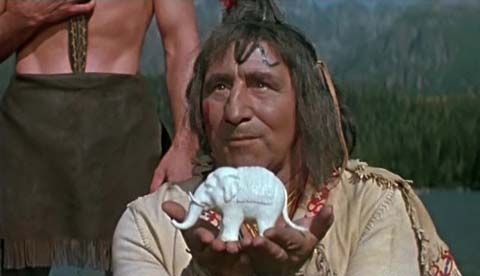
Johannes Knittel was born on August 11, 1910 in Woltrop, Germany. He started acting on stage before attending classes in Muenster, Hamburg and Paris. After World War II he became a councilor for the Communist Party in Hamm and in 1946 became an assistant director working in East German theaters. In 1949 he worked for Phoenix-Film and later DEFA where he directed, wrote screenplays and acted occasionally. He appeared as Split Oak in “Chingachgook, the Great Snake” in 1967. Knittell died on January 3, 1989. Today we remember Johannes Knittel on what would have been his 100th birthday.
Remembering George Rigaud
 Born Pedro Jorge Rigato Delissetche on August 11, 1905 in Buenos Aires, Argentina. His family were immigrants his father being Italian and his mother Basque. He moved with his parents to France in 1930. He used George Rigaud as his name and began competing with Jean Gabin as the hero in action films. He made 30 French films in twelve years before appearing in his first Italian film in 1940s. After World War II her appeared in a few American films before returning to Europe in the late 1950s. He would go on to appear in 23 Euro-westerns in the 1960s and '70s. He was used as a supporting actor playing generals, ranchers, town bosses, preachers and bankers. Some of his most memorable westerns were “Ride and Kill” (1963), “A Place Called Glory” (1965), “Sugar Colt”, “The Texican” both 1966 “Gatling Gun” (1968), “Sundance Cassidy and Butch the Kid” (1969) and “The Stranger and the Gunfighter” (1974). George appeared in over 190 film and TV appearances before his last film “Maravillas” (1981). After retiring he was struck and killed on January 17, 1984 by a motorcycle near his home in the Madrid suburb of Leganés, Spain. Today we remember George Rigaud on what would have been his 105th birthday.
Subscribe to:
Posts (Atom)